
The trials and tribulations of British armour design and manufacture during the war is the subject of much discussion and not something I intend to cover here. Suffice to say the British produced a great deal, some very good and others less so. They also made extensive use of armour designed and produced by the Americans through the lend lease programme.

My original plan was to combine my British infantry and armour collection into a single blog post, but as I've updated that over time it became incredibly long. This post now covers only armour, if you'd like to see the infantry and their weapons you can find that post here.
Armoured cars are a likely support choice for Chain of Command and the British had several different types (and, just to complicate things, there are variants of those types). I’ve tried to include the most common or most likely, although I’ve no doubt I’ll be adding to this part of the collection in the future. I'm not sure if there's a collective noun for armoured cars but here's a gathering of a few...


First up is a Staghound armoured car in resin from Cromwell, with a crew figure from the Plastic Soldier Company.


The Staghound below is on display in the Army Museum Bandiana in Australia. It is certainly large for an armoured car, looking more like a light tank on wheels.

That comparison is easy to make, as the Musee des Blindes has their Staghound displayed right next to a Stuart M3A1.

This Humber MkII is the very old Matchbox plastic kit, so technically 1/76 not 1/72, but it holds up well considering its age. The crew member is another figure from the Plastic Soldier Company.


The Australian Armour and Artillery Museum has a running version of the Humber.

Below is a Daimler MkII armoured car, this one in metal from SHQ, with a crew figure from PSC.


There is one on display at the Tank Museum at Bovington.


Next is a Humber Light Reconnaissance Car MkIII, this one also in metal and from MMS. The crew figure is from Dan Taylor Modelworks.

This is a Dingo, a plastic kit with photo-etched brass detail from S-models. The two crew are from AB Figures.


The Musee des Blindes has one in the collection.

Ford in Canada made a version of the Dingo which they called the Lynx. It used the same body but a different engine and running gear. There is one in the Canadian War Museum.

The later models of the Stuart light tank the M5A1 (which the British called the Stuart V) saw service in a recce role during this stage of the war in Europe and this one is from the Plastic Soldier Company set.

Below is one on display in the Canadian War Museum in Ottawa.

The Musee des Blindes also has one in their collection:

The tank types in use by the British in NW Europe were dominated by the Sherman, Cromwell and Churchill. While the Sherman has a distinctive appearance, the number of models and variants can be very confusing, not least because many of the differences are quite subtle.
The most common variant used by the British was the M4A4, which they called the Sherman V. This housed a different engine to other models which required the rear engine deck to be extended and so the M4A4 was approximately 6" longer. Admittedly that's not something you are really going to notice at this scale, but that and a number of other differences, like the three piece curved transmission housing at the front of the tank help to differentiate it from other variants.
The Sherman M4A4 set from Plastic Soldier Company allows you to build either a standard M4A4 with the 75mm gun, or to make a Firefly. Fireflies were normally allocated to one per troop of regular Sherman 75mm or Cromwells. Here's two of the standard M4A4. I've replaced the bow machine guns as those that come with the kits are rather crude looking pipes.


The excellent collection at the Canadian War Museum features one.

There is also one at the Imperial War Museum in London.

Here is the Plastic Soldier Company's M4A4 as the Firefly version. I've added hessian camouflage netting to this one and two crew figures from AB.


The Australian Armour and Artillery Museum also has a Firefly, this one in running order.


The example below is from the comprehensive collection at the Tank Museum at Bovington.


Churchill tanks were formed into independent armoured brigades which were allocated out to support infantry as needed. This first one is from the Plastic Soldier Company and is armed with a 75mm gun.

The Canadian War Museum in Ottawa has a Churchill Mk III on display.


The collection at the Musee des Blindes also has a Churchill, although this one is a bit of mystery to me. The turret shape looks like a MkIV or a MkV but the 75mm gun has a mantlet that I have never seen on a Churchill before.

The Plastic Soldier Company's Churchills are a bit of a hybrid, probably a mix of several marks, from MkIII to Mark V.

It comes fairly close to this MkIV in the Tank Museum at Bovington.

The Imperial War Museum in London has a Churchill MkVIII on display (the easiest way to spot a Mk VIII are the round escape hatches on the side, these were found to have greater strength than the rectangular ones that featured on earlier models).


There's one in the collection at the Tank Museum at Bovington based on the Mk III version of the Churchill.


The Churchill AVRE with a Petard mortar was created specifically for bunker busting for the Normandy campaign. It's possible to also make one from the PSC Churchills, as they supply the Petard mortar barrel as part of that set.


The PSC set also includes a barrel for the 95mm howitzer variant used for close infantry support.


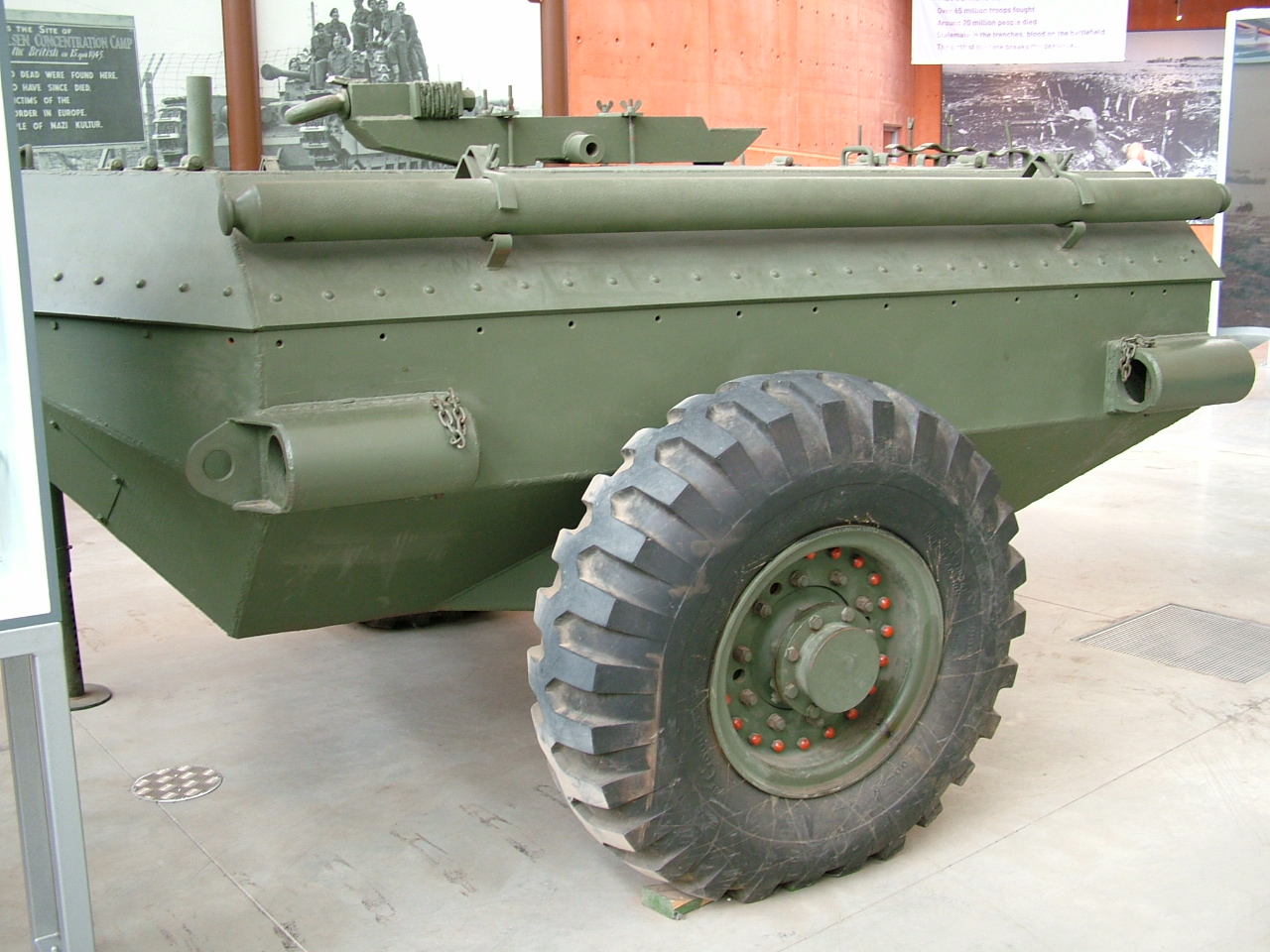
Airfix took their old Churchill plastic kit (first released in 1961!) and in 2006 added a trailer and flamethrower to create the Churchill Crocodile. I've taken the original Churchill tank which comes with the set and made a few modifications, mainly to the turret, to make a more accurate Churchill VIII.


My inspiration was the Crocodile on display at the Bovington Tank Museum.

Had I been paying more attention I would have noted the configuration of the tyre tread on the fuel tank and made it correctly when putting the Airfix kit together.
Airfix also added a bridge to the base Churchill kit so you could make the bridge layer variant. This wasn't something I could envisage occurring in a game. However, I was bought the kit as a gift, so it seemed silly not to make it and have it available should I ever need one.


While I'm on the subject of armoured engineering vehicles, I have this D8 armoured bulldozer, a resin model from 172 Scale Miniatures.


Cromwell tanks were normally assigned to the recconaisance units of armoured divisions, however the 7th Armoured Division had these in their armoured regiments as the main battle tank. This one is a quick assembly plastic kit from Armourfast, a sturdy but slightly basic model made for wargaming. I've added camouflage netting, stowage and a crew figure from AB to give it a bit more character (you can find a step by step tutorial on how I made it in this post).


I had two boxes of the Armourfast Cromwells so that's allowed me to put together three regular variants.


This Cromwell (complete with a bit of camouflage netting) is in the collection at the Tank Museum in Bovington.
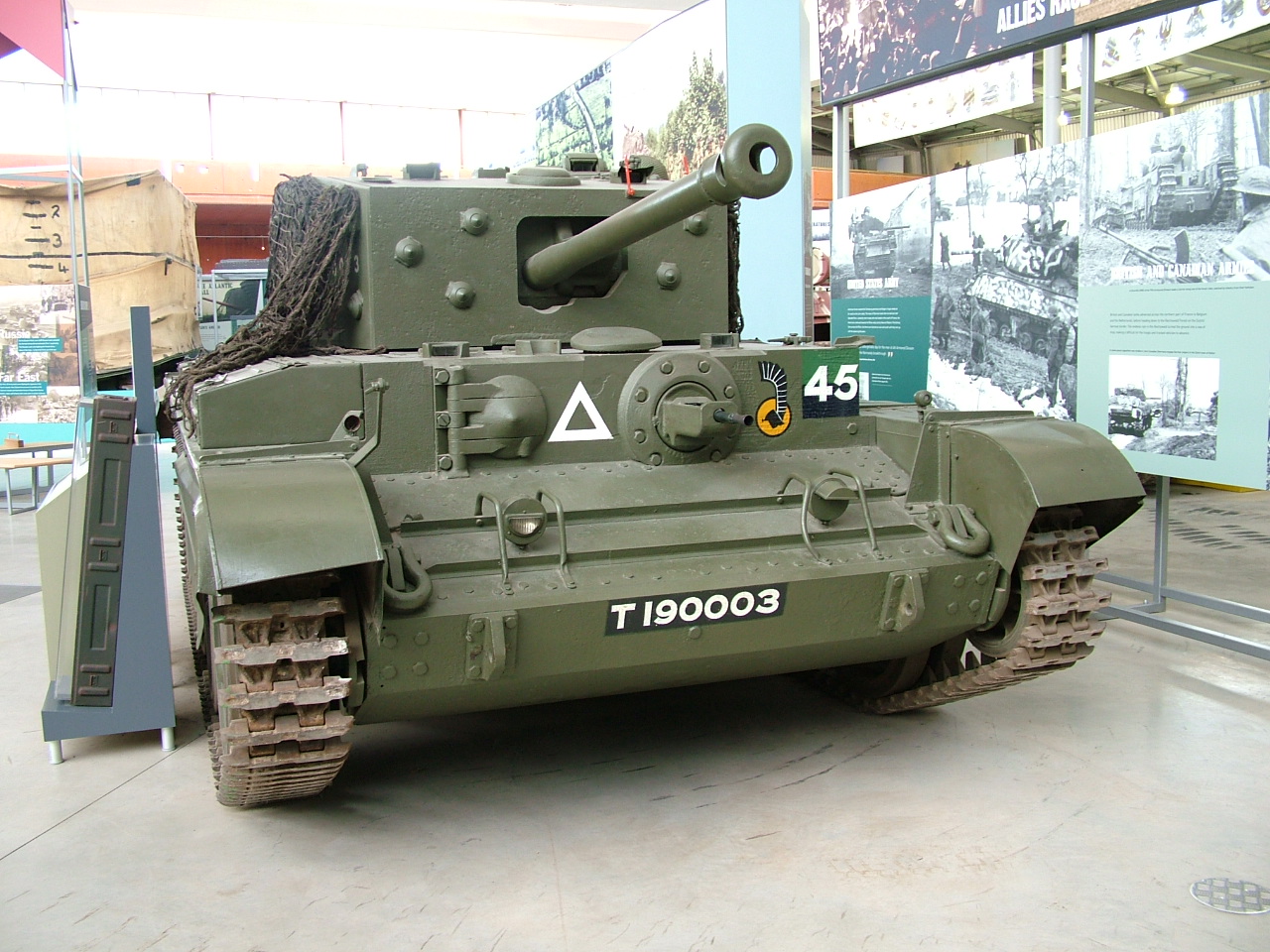

A 95mm howitzer was fitted to the Cromwell as a close support weapon. I made up one of these using the last remaining Armourfast Cromwell kit and substituting a spare 95mm barrel from the PSC Churchill set.


The Cromwell below is in the Musee des Blindes at Saumur in France and is the Centaur version with the 95mm CS gun rather than the 75mm. The Centaur is basically the Cromwell with a Liberty engine, these were designed to be retrofitted with the Meteor engine when they became available.

The Challenger A30 was something of a rushed expedient to equip tanks with the 17 pounder AT gun before Normandy. A rather ungainly looking tank that was based on an elongated chassis of the Cromwell, it appears only 72 of these were made. However, I was surprised to discover how much service they saw, appearing not just in Normandy, but also during Market Garden and then into 1945 with the 7th armoured division. It appears they were mainly used as the fourth tank in a Recce Regiment tank troop, performing the same overwatch role as the Sherman Firefly.


The last British designed tank to see action in the latter part of the NW Europe campaign was the Comet. A fast tank with an excellent gun, it was an AFV the army would have found most welcome a few years earlier. This is the Mk1, a plastic kit from Vespid with crew from AB Figures.


The Tank Museum at Bovington has one in their collection.

As does the Musee des Blindes at Saumur, although this one is a Mk1b and could be a post war model. It has unusual markings which might relate to service in Suez. The variations between the Mk1 and Mk1b are not major and the most obvious external changes were only to the exhaust.

The British mounted the very effective 17 pounder anti-tank gun in a number of different AFVs. The M10 Achilles was the British adaptation of the American tank destroyer. This one is from Armourfast. I've added more detail to the turret interior and a crew of various AB Figures.


There's one on display at the Tank Museum in Bovington.

The Musee des Blindes has the US version with the 76mm gun rather than the British weapon.

The 17 pounder was also mounted on the chassis of the Valentine. In an unusual configuration, it was mounted facing the rear of the vehicle, probably ideal for a quick getaway from an ambush position. This kit comes in resin and metal from Early War Miniatures and once again I've used AB figures to make up the crew.


The Australian Armour and Artillery Museum has an Archer in their collection.

As does the Tank Museum at Bovington.

That gives me quite a few options to field an AFV armed with the formidable 17 pounder.

There's not much call for on table artillery in a platoon level game but the Sexton, mounting the 25 pounder, was occasionally called on for close support. This is a resin model that comes as a single piece including a base. I don't normally base my vehicles but removing the base from this one was going to prove quite a challenge and so I decided I could live with it. The camouflage netting was not a later addition it comes as a moulded part of the model itself. The crew are AB Figures.


The Australian Armour and Artillery Museum has one in their collection.

As does the Musee des Blindes.

That covers off most of the common AFVs the British are likely to field in the context of a platoon level game like Chain of Command. Yet somehow, it's strangely inevitable that more will be added......

Lovely paint jobs!
ReplyDeleteThanks!
DeleteA lovely collection. Interesting to see how the different paint on the end half of the Firefly gun alters its appearance to a standard Sherman when set against the woodlands.
ReplyDeleteThanks, at some stage I'd also like to do a Firefly with the wavy camouflage on the barrel, that tried to give the illusion of the shorter 75mm gun.
DeleteA fantastic collection! I can't imagine that there will be too much more to add.
ReplyDeleteThanks for all the photos and they give me inspiration to visit a lot of museums
LOL, there's always more to add. I really enjoy seeing the stuff in museums. I'm not really a technical person but there's something about seeing the real thing that gives a great perspective on what I'm modelling or gaming with.
DeleteBeautiful work!
ReplyDeleteCheers Ray!
DeleteAwesome and inspiring!
ReplyDeleteThank you!
DeleteLovely collection. Seems to me you need to get into Rapid Fire or Battlegroup so you can use all these lovelies in a game!
ReplyDeleteThanks. Tried Rapid Fire but it wasn't for me, but I can see how it allows lots of models on the table. I have the Battlegroup rules but yet to try them, no one at the club or in my wider gaming circle plays.
DeleteA first-rate post as ever! I’m never quite sure which is more intimidating: your frankly indecent rate of production, or the skill required to turn it all out looking quite so splendid.
ReplyDeleteAnd very pleased to see a few metal kits sneaking into the latest additions. I know plastic and 3d prints have their virtues, but I do prefer the heft, as senseless as that sounds!
Great collection, and a very interesting write up, cheers!
ReplyDelete