Until quite recently I was unaware that the Australian Armour and Artillery Museum even existed. This privately operated museum is situated just outside Cairns in Northern Queensland and while it is close to the towns that service the Great Barrier Reef it is a long way from any of the country's major cities.
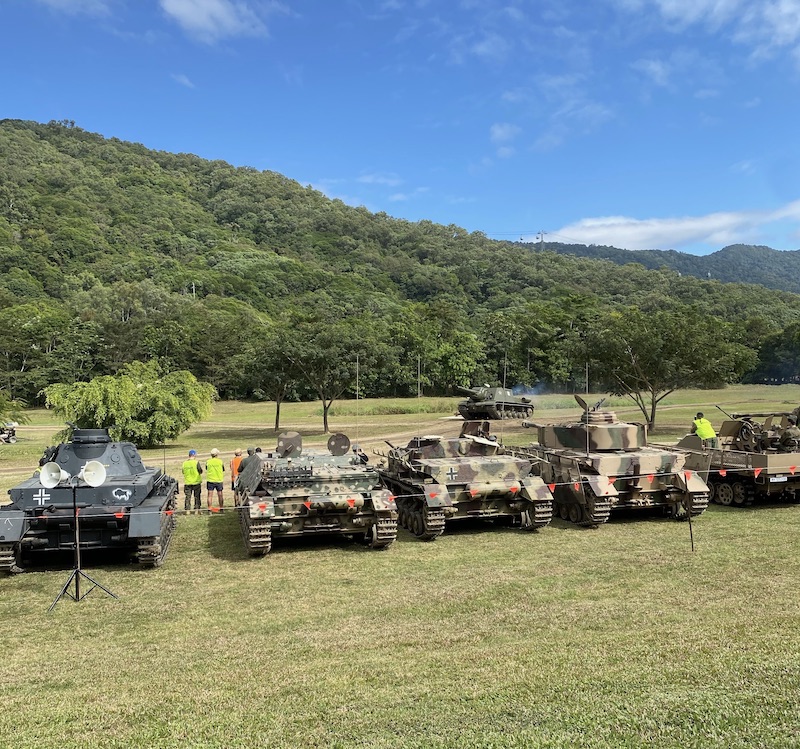
In August they hold Armourfest, a three day event where the highlight is watching many of their running tanks in action on a dedicated track at the rear of the main building.

I can't express how impressed I was with the museum's Second World War collection. Having visited the Tank Museum at Bovington and the Musee des Blindes at Saumur the bar has been set high, but I have to say the Armour and Artillery Museum far exceeded my expectations.
They have a large post-war collection, but like many visitors at Armourfest I was drawn by what they had on offer from the Second World War. There is so much to see that I took more than 600 photographs. I will post this as a couple of instalments and focus initially on German and Soviet vehicles.
As you might expect they have several of the usual crowd pleasers, with German equipment representing a significant slice of the armaments on display. The big cats are here, like this Tiger I Ausf E.
And while the classic German late war tanks are always great to see, it was a real treat to see several AFVs that I have never seen before. In particular there were a number of Soviet vehicles, most impressive of which was the ISU-152. It may be short on elegance but it's a fearsome looking machine.
The ISU-152 is in running order and watching it make its way noisily around the track was one of the highlights on the opening day.
Another of the big cats on show is the Jagdpanther.
However the main attraction for many is the Panther Ausf D. Made all the more appealing because it's also one of the running tanks in the collection. While a few of those have had replacement engines this Panther has an original engine.
Being able to get this close to a working Second World War tank was something I've never experienced before.
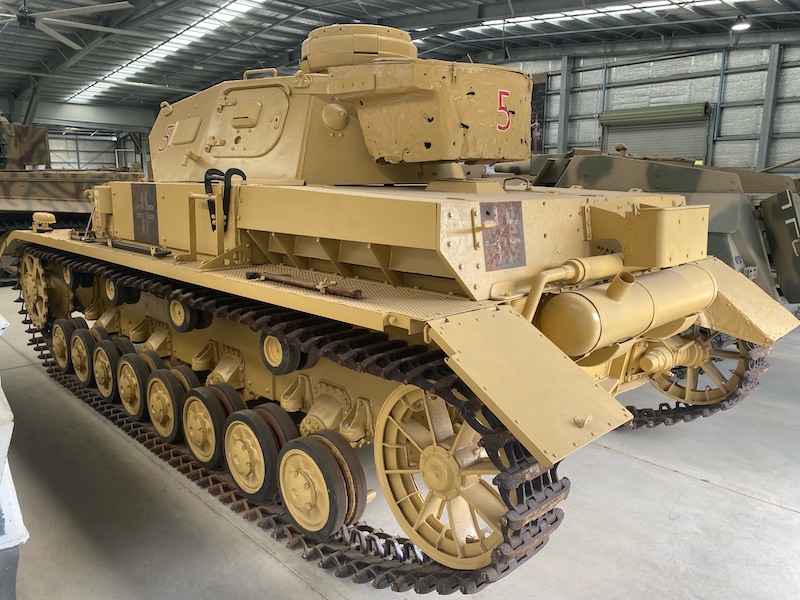
I've been fortunate to see Tigers and Panthers in other museum collections, so what was pleasing about this one was the number of other German tanks on display. Not least, their collection of Panzer IV variants which is very impressive. They start with the early PzKfwIV Ausf D.
This is another of the running tanks which was driving around the track on the first day.
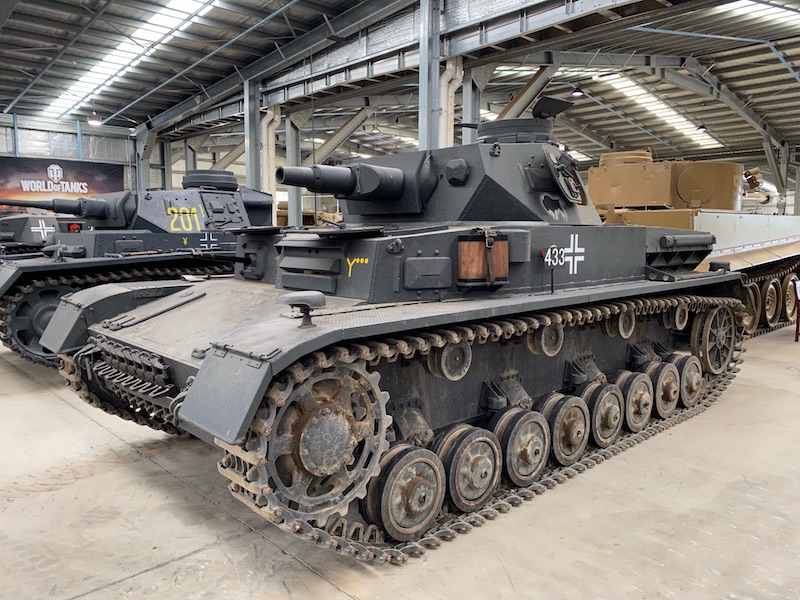
Next they have the slightly later model Ausf E
The additional armour that was added to this version is plain to see.
Next in line is an Ausf G with the longer KwK 40 75mm gun.
Finally, they have the Ausf J, this another of the running tanks that we had the opportunity to see.
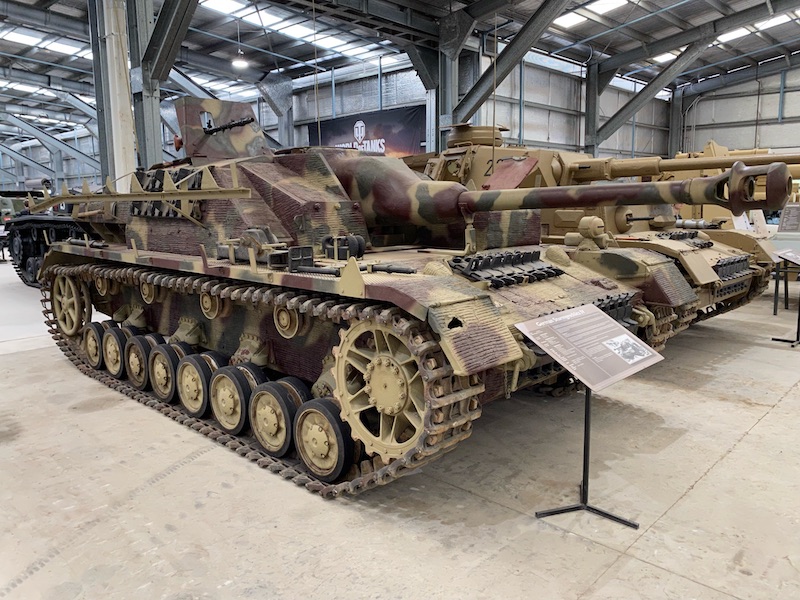
If that's not enough Panzer IVs for you then there are the variants based on the PzIV chassis. These include one of very few surviving StuG IV self propelled guns.
Also a Jagdpanzer IV.
The collection also includes many of the smaller German vehicles and few come more compact than the Hetzer.
The Hetzer utilised the chassis of the Pz38(t) and so it was only fitting to see one of those in the collection as well.
This one is also in running condition and we were able to watch it on the first day.
Sticking with the earlier part of the war they have a StuG III Ausf A.
And from a little later a PzIII Ausf J.
Despite the attraction of so many iconic German tanks what really grabbed my attention were several vehicles that I've never seen before, in particular Soviet tanks. I've already mentioned the intimidating ISU-152.
They also have a running SU-76. This was great to see, particularly as it was the second most produced Soviet AFV behind the ubiquitous T34.
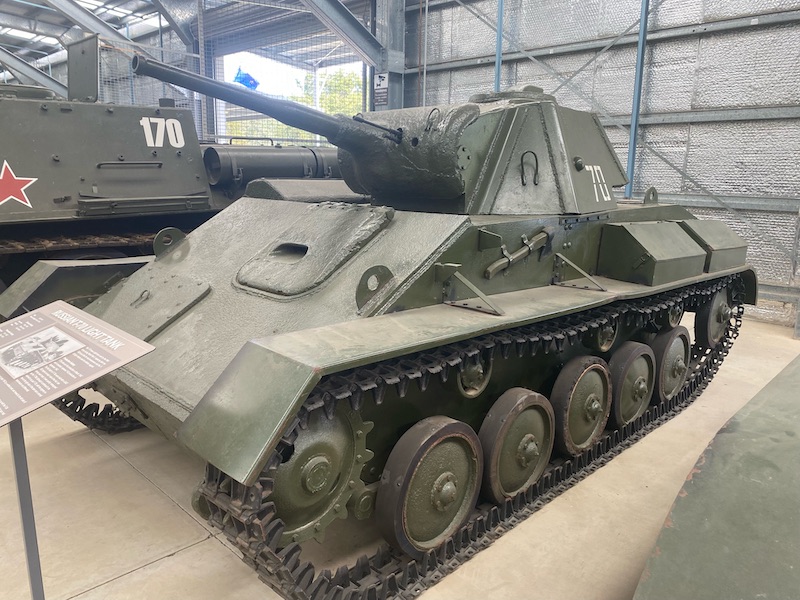
The SU76 was based on the hull of the T70 light tank, which was extended with an additional road wheel to allow the relatively small AFV to accomodate the Zis-3 76mm gun. So it goes without saying that it was great to see a T70 up close.
The Soviets never really developed a suitable series of light tanks and it does much to explain why they found the lend-lease Valentine a much more suitable vehicle for their recconaisance units. The even smaller T60 light tank, which sits alongside the T70, only confirms the unsuitability of these small vehicles.
While the T-26 was present in large numbers at the start of the war it doesn't appear that many have survived. The museum has two interesting examples. First a twin turreted version.
Second, a more familiar looking version, but this one in German colours and with an interesting history. The tank was acquired from Spain and the German colours were identified during the restoration process indicating the tank had seen German service at some stage. Not unusual given their known use of captured material although how it ended up in Spain is less clear.
Less surprising was seeing a T34/85, the one Soviet tank you can almost always count on seeing in any collection of tanks from the Second World War.
This is another of their running tanks and I managed to get a few pictures soon after it had returned to the museum hall. A good opportunity to take some snaps of a 'weathered' tank for anyone looking for modelling tips.
Last they also have on display a SU100 tank destroyer mounting the very powerful 100mm AT gun.
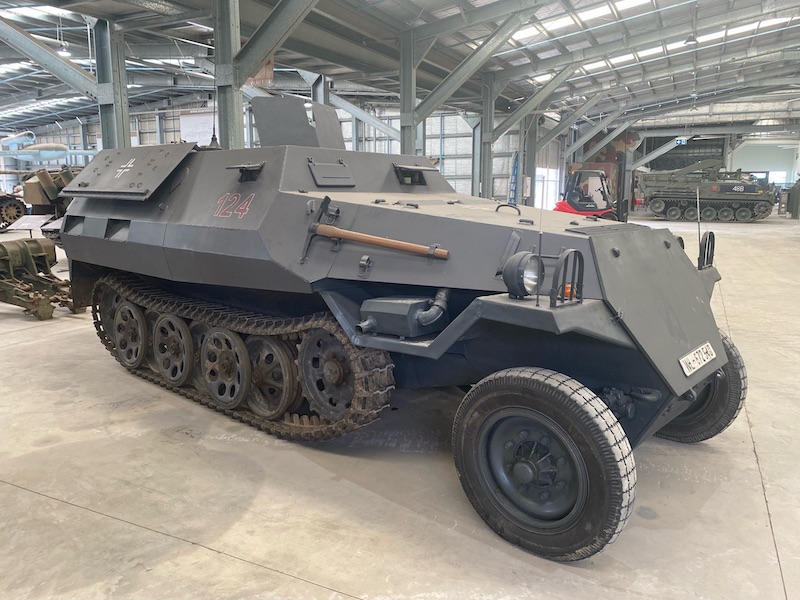
Aside from the numerous tanks the museum also has a good collection of German half tracks including both Sdkfz250 and 251 variants.
Certainly plenty to see and I haven't even covered the US, British and Australian equipment.....or any of the artillery. I'll save that for a second post and leave you with a couple more German vehicles. A Raupenschlepper.
And last but not least, their Schwimmwagen, which as you can see, is also in running order. Incidentally, if you look in the background of this photograph over the fence is a primary school. During recess on the Friday many of the boys were 'racing' the tanks along the other side as they passed by. I was very envious, my school had nothing as entertaining on the other side of the schoolyard fence.
You can find the second post featuring a lot of the Allied armour in
this post.